
In modern mass food manufacturing, speed is king. Machines that pulverize 500 kilograms of spices per hour are celebrated for operational efficiency. But food science reveals a tragic truth: high processing speed is the greatest enemy of whole spices.
The Science of Spice Volatiles
The aroma of coriander comes from linalool; black pepper owes its sharpness to piperine; cloves smell divine because of eugenol. These chemical compounds are volatile terpenes with boiling and evaporation thresholds starting as low as 42°C.
When an industrial hammer mill crushes whole coriander seeds at 3,000 RPM, the contact temperature frequently rises above 75°C. The aromatic oils instantly vaporize into the factory exhaust vents, leaving behind a dull, lifeless powder that requires artificial oleoresins to smell fresh.
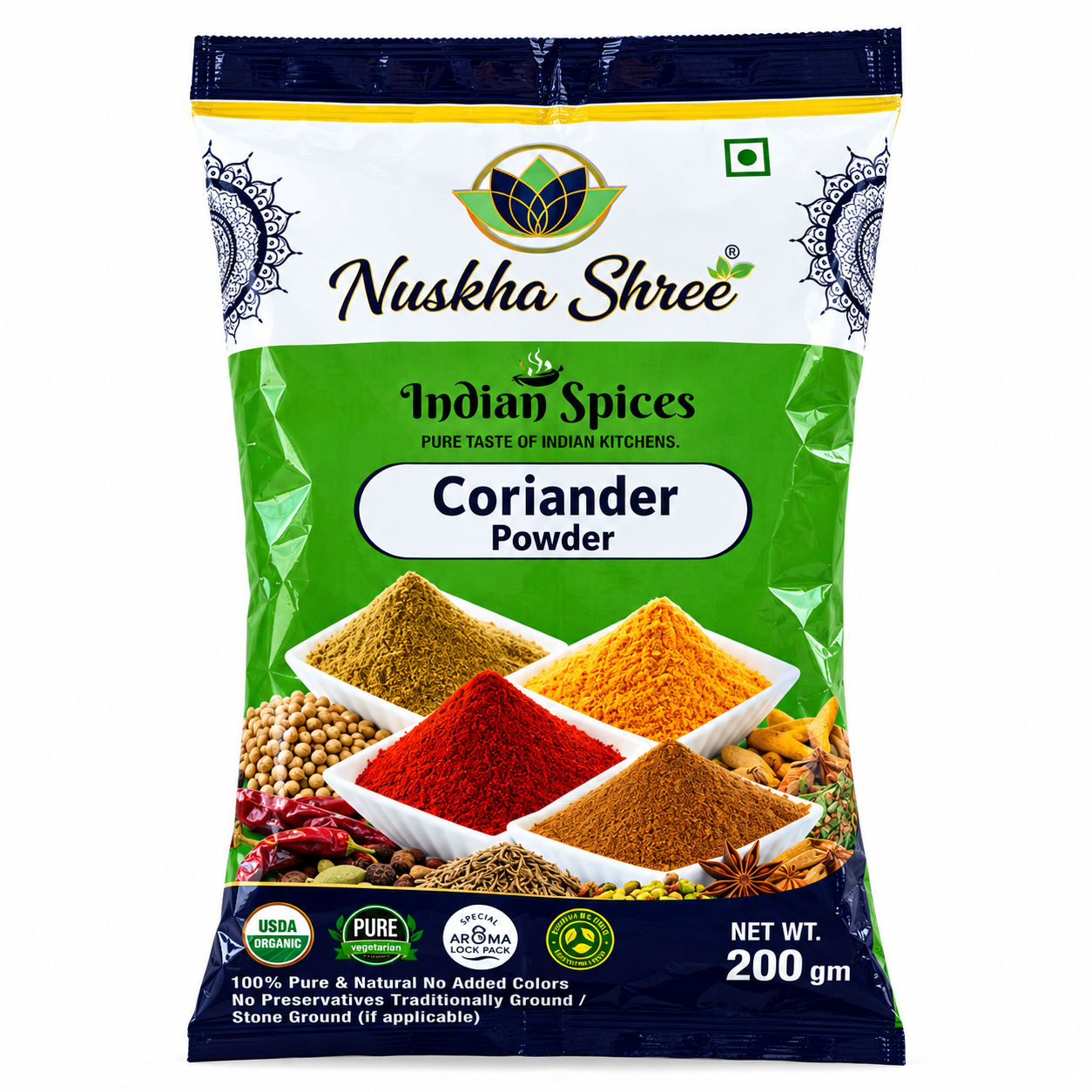
Nuskha Shree utilizes slow-turning stone chakkis running at less than 40 RPM. The natural porosity and mass of the traditional stone stones absorb and dissipate friction, maintaining processing temperatures below 38°C. The natural essential oils remain sealed within every gram of powder.